
So What the Heck is all this Edith Business?
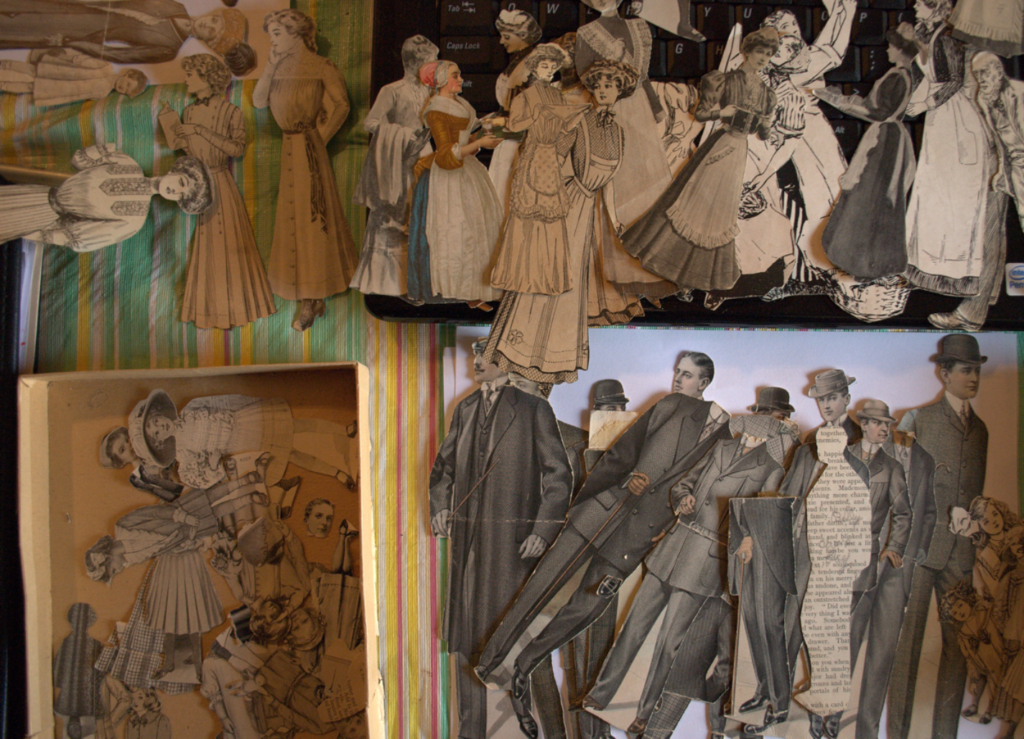
About a thousand years ago, when I was much smaller and somewhat younger (and if I was sitting still long enough) I occasionally played with a box of “paper dolls” given to me by my mum; she had played with them, and they had been given to her by her mother, Edith, who played with them – she made them. They were always in an old glove box (and some still are).
The appeal was strong to me, even back then. I loved the fashions on them all – from household help to fancy dress. The paper dolls were actually figures cut out from ladies’ magazines around 1908-10. They are, without exception, cut out with exacting care and almost all of them have names written on the back. (One of 11 children, Edith had 4 older sisters…she just may have had a little help.) Many names are either made up, or so creatively spelled it was difficult to decide what they were called. Some have been named into families and some given ages. There are a number that have been given household occupations – from gardener to governess to footman. There are a few female teachers, from second to fourth form. I learned a lot about family and class structures from an old glove box of cut-outs.
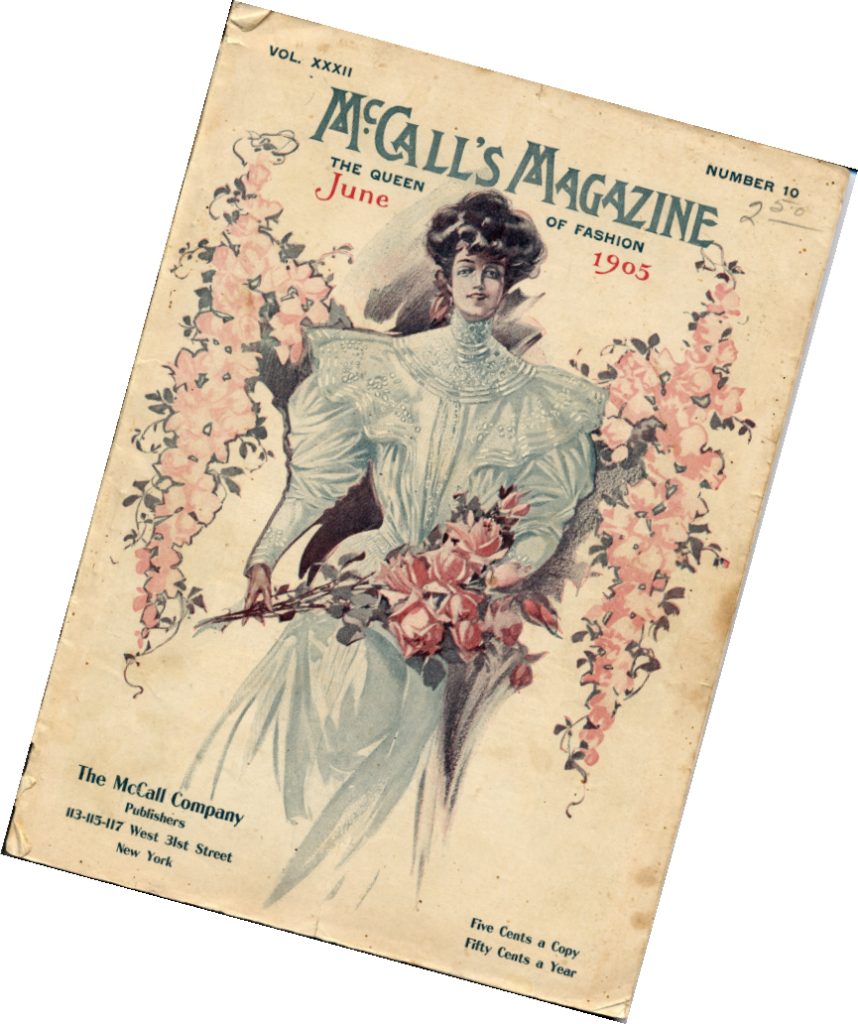
The figures are mostly from pattern magazines like McCall’s Magazine (The Queen of Fashion). The styles indicate issues from about 1908 to 1910 (my Granny was born in 1898), which would make sense for when she’d have played with them.
For many years, I wanted to do something with the paper dolls -rather than having them hidden away. I was a picture framer, and tried to design some kind of affordable display. I tried showing them under glass on a coffee table, and considered a scrapbook. One way or another, I couldn’t bring myself to display them in a way that I couldn’t touch them anymore. They were still toys to be loved.
Time went by – suddenly they were over 100 years old. They’d gone past an anniversary, unnoticed. I wondered about scanning and cataloguing them. Using a tried and true method to get work done, I packed them up, loaded a scanner and laptop and spent a week at a cottage. Ideas percolated.

I planned to do a series of cards that would juxtapose my alleged sense of humour and my take on life with the images of a “lady” from the Edwardian era. A look at how we view(ed) womanhood. I collected and photographed material for the cards, keeping every visual item tied strictly to the era. The modern contributions (from MY era) would clearly stand out. I read plays and stories from the early 1900’s which seemed necessary, but was really just entertaining. A copy of J.M. Barrie’s Peter and Wendy that belonged to my Grandmother led to more reading of his work, which led to quoting him…
Eventually the scanning and scanning (and scanning) led to a series of composed prints and multimedia works. The little project had taken on a life of it’s own. (More here) And the name of this series?
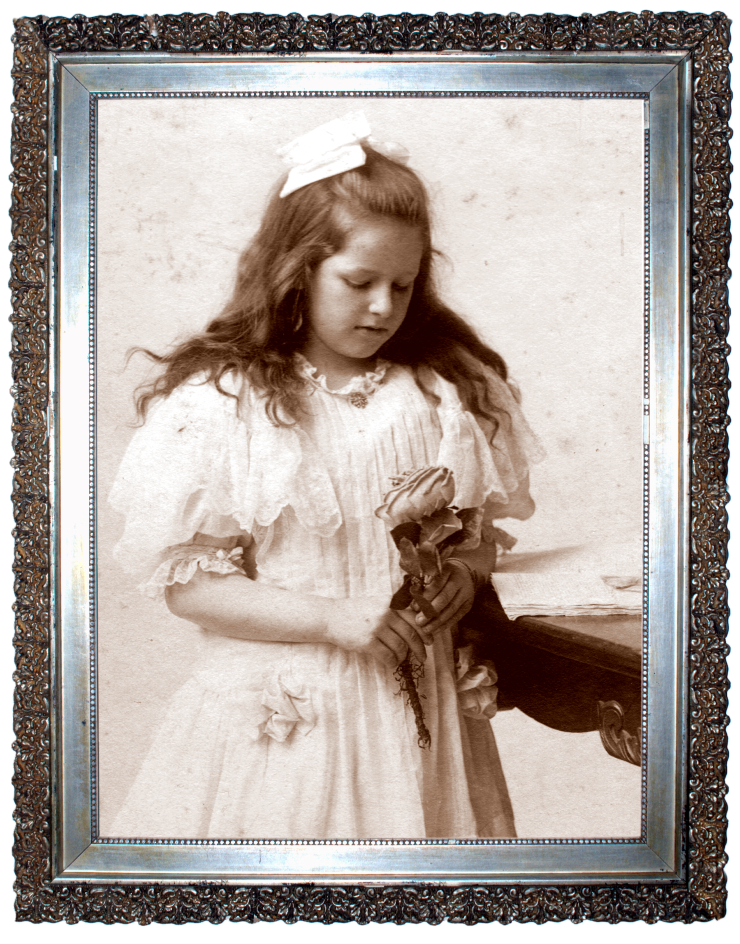
My grandmother (that would be Edith) died when I was only 3, so I don’t remember her very well; she never met my youngest brother and sister. My mother adored and missed her mummy, and loved to tell stories about Edith – so that’s all we have. One story Mum told us always stuck in my mind; I could picture it. While waiting for an appointment at the doctor’s office, a nurse told my grandmother a funny story. Granny threw her head back and laughed, and died on the spot. What a way to go. I know now she had heart disease, which isn’t funny at all…apparently she knew she’d never know all her grandchildren. However, that hasn’t wrecked the story. Edith Died Laughing.
I recently took part in an online seminar hosted by the rare and special collections division at the McGill University Library. Playing with Paper; Dolls in Two Dimensions and Beyond was fun – it didn’t cover anything quite like my “dolls” but reawakened my interest in my own collection. I may not be done playing with those dolls yet.

You May Also Like